

my challenge with I

I. What a word. How is it that this simple little mark – this brief, mono-syllabic utterance – has been asked to carry the enormous task of representing who we know ourselves to be? I find myself laughing on the inside at the irony of it as I write this.
I, me, mine. I haven’t found a way to think, write, or talk about my experiencing of and participating in living without relying heavily on these words. And yet, as I notice these words emerge in my mind, something in me winces a bit at their insufficiency for conveying what I mean.
Somehow, our culture has settled into familiar patterns of making direct and certain statements with these simple terms that seem so far from what I actually experience. We routinely say things like “I am sad,” “I want ice cream,” and “I don’t want to cause harm.” Who is this I of which we speak?
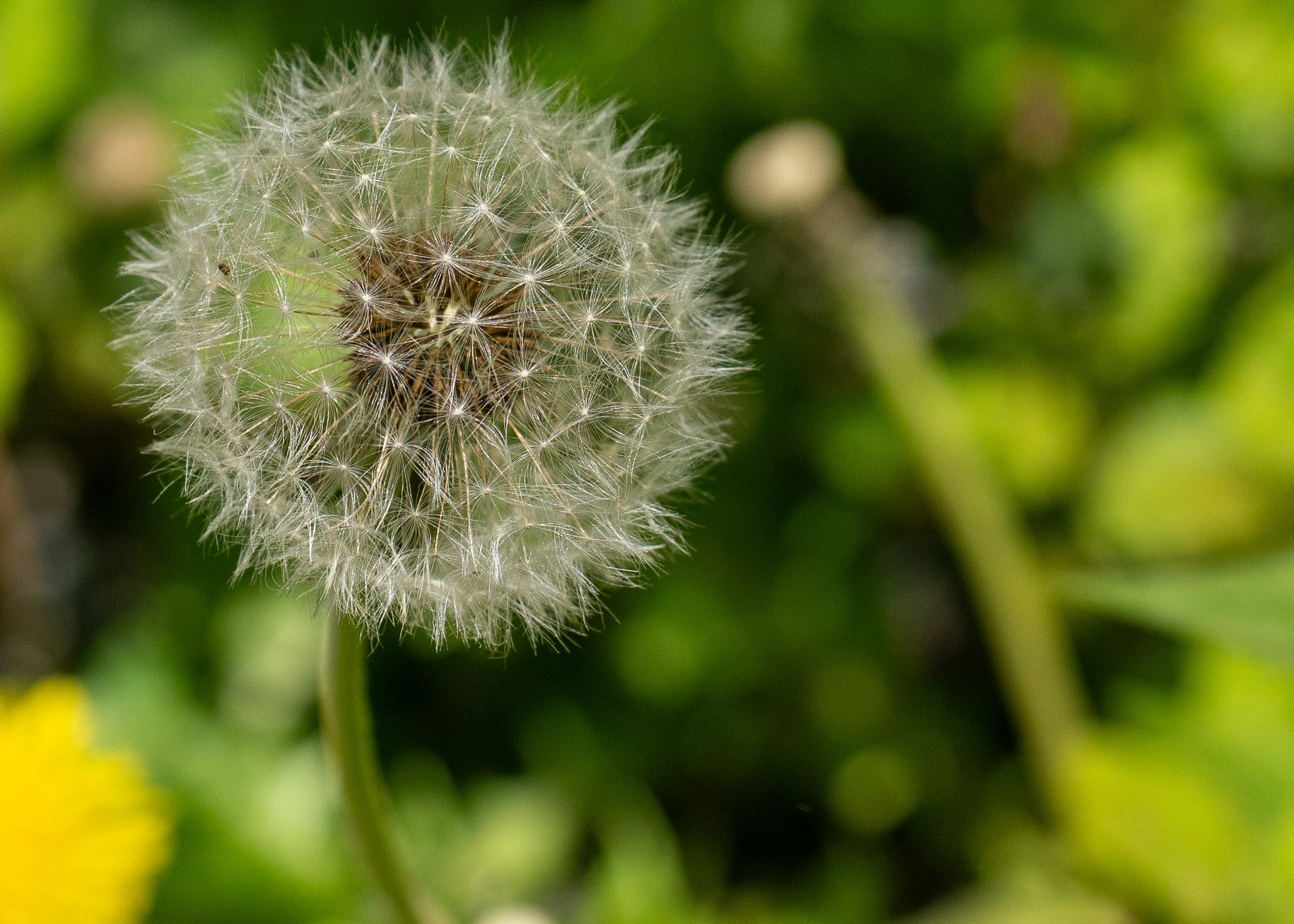
We routinely use these simple words in these familiar ways to point to that which is thinking, feeling, saying, and doing. But my experience of myself and others is far from simple. I experience myself and others as vast and mysterious and often self-contradictory. I experience myself and others as a bundle of wanting and not wanting at the same time.
I often find it difficult to answer the question “What do you want” with a simple response because I almost always sense what I can refer to as me wanting many different things – sometimes seemingly diametrically opposed to each other. I often find it difficult to answer the question “What are you thinking” with a simple response because I am often aware of many thoughts appearing, abiding, and disappearing without “my” effort. I often find it difficult to answer the question “What are you feeling” with a simple response because I am often experiencing a wide range of emotions at the same time.
These themes of noticing and reacting to noticing are central to my exploration in this love letter. So, I want to share a bit about how I am thinking about this now, and the words I often use to try and express more precisely what I find to be true about my experience. I invite you to think of this next section as a glossary I likely will refer back to in future posts.
Some distinctions I find helpful
· Distinction – this word is central to my evolving understanding and relationship with living and the support I offer to my clients. I first encountered it during my training as an Integral Coach at New Ventures West. I use it to mean the noticing and calling out of something within the whole of what we encounter that can support recognizing some important differences between aspects of that experience. Whether a distinction is supportive depends on the context and intentions related to what we are observing. And I find it helpful to recognize that naming distinctions doesn’t negate wholeness.
· Aspect – I use this term often to mean a nature, quality, or characteristic of something (like our self); it represents a way we can view a phenomenon and attend to it. For example, “One aspect of an apple is its smooth and fragrant skin.” This way of thinking and speaking supports seeing nuance and distinction within whatever we are observing.
· Facet – I often use this term as a synonym for aspect. It also evokes the metaphor of the small, polished, flat surfaces on a cut gemstone. As we turn a gemstone in our hands, different facets are revealed through how they interact with the light – each belonging to the whole and yet presenting a new experience.
· That which notices – I sometimes use this phrase as a way of interrupting our habitual translation of words like I, me, and you. I find this phrase unfamiliar enough that it can sometimes invite us to be curious about what we are referring to.
· Something, or something in me – for example “I am sensing something in me who feels angry” as compared to “I am angry.” This is a powerful linguistic move that can open a new way of relating to our experience.
I first encountered this term through Steve March who offered it to me to help me make sense of an experience I was having during my coach training at New Ventures West. It was introduced as a way that Ann Weiser Cornell recommends as part of her approach called Inner Relationship Focusing developed with Barbara McGavin. Inner Relationship Focusing is offered with the intent to support people to make peace with their inner world. Ann studied and practiced with Eugene Gendlin, a philosopher and psychologist who developed the method called Focusing. I trained with Ann to learn the primary components of her method and how to apply it. I and many of my clients find this to be a very supportive perspective.
· Self-in-Presence – Ann Weiser Cornell uses this term to refer to the aspect of the self that has the capacity to notice and relate to our somethings with curiosity and calm. It is an aspect of our self that is not reactive to whatever arises.
· Verbal analytic self – that aspect of our self that presents itself to us and the world through concepts, words, and “reason”.
· Most integrated self – I will often use this term to point to that aspect of us that is least encumbered by our habitual fixations.
· Conceptual awareness and non-conceptual awareness – I encountered this distinction through the teachings of Tenzin Wangyal Rinpoche. Rinpoche encourages his students to notice that we engage in different forms of noticing. Most of us are more familiar with conceptual awareness, meaning that everything we notice is automatically related to through our structures of interpretation and beliefs. When engaging solely through conceptual awareness, we don’t notice that there was noticing before concept. Non-conceptual awareness (what Rinpoche also calls naked awareness) is a way of noticing before it gets translated into our ideas and beliefs. It is a more direct, unfiltered way of experiencing.
· True nature of mind and the busy, narrating mind – this is another important distinction I have encountered through various Buddhist traditions. In these traditions, the true nature of mind is experienced as spacious, still, and illuminated. The busy, narrating mind describes the aspect of our mind that is prone to a lot of chatter and rumination.
· Quality of self – this is a phrase I learned from Judith Blackstone while training to support people with her Realization Process. This term points to the direct sensing or feeling of that which we recognize to be me – not a thought – a feeling.
· Fundamental consciousness – another phrase I encountered through my studies with Judith. We use this term to point to an experience of our own nature as a fundamental, unconditioned, all-pervasive consciousness. This can be thought of as the basis of both our individual sense of wholeness (our authentic self) and our experience of oneness with the environment.
· A singular, unchanging, autonomous self as compared to a compounded, impermanent, and interdependent self – I encountered this distinction through the writings of Dzigar Kongtrul Rinpoche and other Buddhist teachers. A few shorthand ways I use to describe this distinction are a concrete self as compared to a functional self, or self-as-object as compared to self-as-process.
· System 1 and System 2 – I encountered these terms through Daniel Kahneman’s book Thinking, Fast and Slow. Kahneman introduces these two “fictional” terms to describe two very different ways the human mind processes experiences. System 1 represents the fast, automatic, intuitive, and largely unconscious ways we encounter and relate with the world. System 2 represents the slow, deliberate, effortful, and conscious ways we can encounter and relate with the world. Kahneman asserts that we mostly know ourselves as System 2, but the vast majority of how we experience and respond to our encounters is happening through System 1.
An invitation to reflect
What is present for you now after relating with this post?
What, if anything, has been evoked in you?
Who is the one noticing?
Who is the one describing?